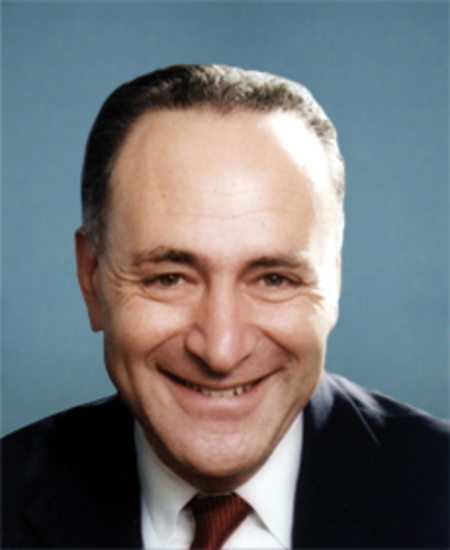
The Record · New York
Charles E. Schumer
NY · Democrat · Senate
The short version
Charles E. Schumer hurt women and families in 3 of the 29 votes we track.
What hurt women and families most
Voted against protecting the right to birth control.
What it means for herShe's 19 and on the pill. Her right to birth control rests on Supreme Court rulings from 1965 and 1972. When the Court ended Roe in 2022, one justice wrote that it should rethink the 1965 ruling. This bill would have made birth control a right under federal law. Source: Dobbs v. Jackson, 2022, Thomas concurrence
Voted against restoring the Voting Rights Act.
What it means for herShe's 70, Black, and lives in Georgia. Until 2013, her state needed federal approval before changing voting rules, like closing polling places. After the Supreme Court ended that, places that had needed approval closed 1,688 polling places by 2018. This bill would have brought the check back. Source: Leadership Conference Education Fund, 2019
Voted against national rules to protect voting.
What it means for herShe's a nurse who works 12-hour shifts, and Election Day is a workday. This bill would have given every voter at least two weeks of early voting, weekends included. It would also have let anyone vote by mail and made Election Day a federal holiday. Source: Bill text, S.2747
Every vote we track
Hurt women and families3
- Voted noProtecting the right to birth controlWhat it means for herShe's 19 and on the pill. Her right to birth control rests on Supreme Court rulings from 1965 and 1972. When the Court ended Roe in 2022, one justice wrote that it should rethink the 1965 ruling. This bill would have made birth control a right under federal law. Source: Dobbs v. Jackson, 2022, Thomas concurrence
Details
Official title: S.4381 — Right to Contraception Act (cloture)From the official Senate roll call (S4381, 2023–24, roll call 190): voted NAY.official roll call - Voted noRestoring the Voting Rights ActWhat it means for herShe's 70, Black, and lives in Georgia. Until 2013, her state needed federal approval before changing voting rules, like closing polling places. After the Supreme Court ended that, places that had needed approval closed 1,688 polling places by 2018. This bill would have brought the check back. Source: Leadership Conference Education Fund, 2019
Details
Official title: John Lewis Voting Rights Advancement ActFrom the official Senate roll call (2021–22, roll call 459): voted NAY.official roll call - Voted noNational rules to protect votingWhat it means for herShe's a nurse who works 12-hour shifts, and Election Day is a workday. This bill would have given every voter at least two weeks of early voting, weekends included. It would also have let anyone vote by mail and made Election Day a federal holiday. Source: Bill text, S.2747
Details
Official title: Freedom to Vote ActFrom the official Senate roll call (2021–22, roll call 420): voted NAY.official roll call
Helped women and families25
- Voted yesProtecting abortion access in every stateWhat it means for herShe's 27, pregnant, and lives in Texas. Texas is one of 13 states that ban almost all abortions. This bill would have protected abortion in every state until a fetus could survive outside the womb, and later when her life or health is at risk. Source: Guttmacher Institute, Sept. 2026
Details
Official title: S.4132 — Women's Health Protection Act (cloture)From the official Senate roll call (S4132, 2021–22, roll call 170): voted YEA.official roll call - Voted yesThe 2022 gun safety lawWhat it means for herShe's 22 and just left a boyfriend who hit her. An abused woman whose abuser has a gun is about 5 times as likely to be killed. Before this 2022 law, a conviction for hitting her barred a husband from having a gun, but not a boyfriend she did not live with. Now it covers boyfriends too. Source: American Journal of Public Health, 2003
Details
Official title: S.2938 — Bipartisan Safer Communities ActFrom the official Senate roll call (S2938, 2021–22, roll call 242): voted YEA.official roll call - Voted noThe 2025 law that cut MedicaidWhat it means for herShe's 24, works part-time in Ohio with no insurance from her job, and hopes to have a baby someday. Medicaid pays for about 4 in 10 U.S. births. Starting in 2027 in most states, she must show 80 hours of work a month. If a slow month or a lost form cuts her off, she loses coverage before she is even pregnant. Source: KFF, 2025
Details
Official title: Medicaid cuts / work requirementsFrom the official Senate roll call (2025–26, roll call 372): voted NAY.official roll call - Voted noRepealing the Affordable Care ActWhat it means for herShe's 26, on Medicaid, and gets birth control at Planned Parenthood. This bill would have stopped Medicaid from paying Planned Parenthood for one year. It would also have ended the fine for going without health insurance. Source: KFF, 2017
Details
Official title: H.R.1628 — ACA "skinny repeal"From the official Senate roll call (HR1628, 2017–18, roll call 179): voted NAY.official roll call - Voted noStripping protections for Native womenWhat it means for herShe's 30, Native American, and lives on her tribe's land. Her husband is not Native, and he hits her. Of Native women who have faced violence, 97 percent were hurt by at least one person who was not Native. This would have removed the part of the bill that let her tribe's court charge him. Source: National Institute of Justice, 2016
Details
Official title: S.47 — Coburn amendment striking tribal protections from VAWA 2013 (amendment, 2013)From the official Senate roll call (2013–14, Senate vote 14): voted NAY.official roll call - Voted noPassing a narrower Violence Against Women ActWhat it means for herShe's 29, and a man she used to date keeps threatening her. More than 1 in 3 U.S. women have faced physical or sexual violence or stalking by a partner. VAWA pays for legal help, housing, and police training. This vote would have passed a narrower version that left out the new protections in the full bill. Source: CDC, National Intimate Partner and Sexual Violence Survey 2023/2024
Details
Official title: S.47 — Grassley substitute narrowing VAWA 2013 (amendment, 2013)From the official Senate roll call (2013–14, Senate vote 13): voted NAY.official roll call - Voted noLetting states drop coverage while papers are checkedWhat it means for herShe's 23, a U.S. citizen, and newly pregnant. She applies for Medicaid, but her birth certificate is in another state. Today her state must cover her for up to 90 days while it checks. This would have let states refuse, and cut federal money for her care if her papers were not cleared in time. Source: Code of Federal Regulations, 42 CFR 435.956
Details
Official title: Blackburn amendment — Medicaid and CHIP bar by immigration status (motion to waive, 2025)From the official Senate roll call (2025–26, Senate vote 345): voted NAY.official roll call - Voted noAdding prison time to an existing born-alive lawWhat it means for herShe's 22 weeks pregnant and just learned her baby has a fatal condition. Only 1.1% of U.S. abortions happen at 21 weeks or later. If her baby is born alive after an abortion, this bill would make her doctor send the baby to a hospital right away, even if it cannot survive, or face up to five years in prison. Source: CDC, Abortion Surveillance, 2024
Details
Official title: S.6 — Born-Alive Abortion Survivors Protection Act (cloture on the motion to proceed)From the official Senate roll call (2025–26, Senate vote 11): voted NAY.official roll call - Voted yesProtecting access to IVFWhat it means for herShe's 34, married, and has tried for a year to have her first baby. In the U.S., 1 in 5 married women like her cannot get pregnant after a year of trying. This bill would have made IVF a right under federal law, and made health plans that cover pregnancy care cover fertility care too. Source: CDC, 2024
Details
Official title: S.4445 — Right to IVF Act (cloture, 2024)From the official Senate roll call (2023–24, Senate vote 242): voted YEA.official roll call - Voted noBringing back the Title X 'gag rule'What it means for herShe's 20, has no insurance, and gets birth control at a Title X clinic. After the 2019 rule barred clinics like hers from referring for abortion, many left the program. Title X served 844,083 fewer people in 2019 than in 2018. This would have brought that rule back. Source: U.S. Department of Health and Human Services, Federal Register, 2021
Details
Official title: S.J.Res.41 — Title X rule disapproval (motion to proceed, 2022)From the official Senate roll call (2021–22, Senate vote 140): voted NAY.official roll call - Voted noAdding prison time to an existing born-alive lawWhat it means for herShe's 22 weeks pregnant and just learned her baby has a fatal condition. Only 1.1% of U.S. abortions happen at 21 weeks or later. If her baby is born alive after an abortion, this bill would make her doctor send the baby to a hospital right away, even if it cannot survive, or face up to five years in prison. Source: CDC, Abortion Surveillance, 2024
Details
Official title: S.311 — Born-Alive Abortion Survivors Protection Act (cloture, 2020)From the official Senate roll call (2019–20, Senate vote 58): voted NAY.official roll call - Voted noA permanent ban on federal money for abortionWhat it means for herShe's 30, self-employed in Illinois, and gets federal help paying for her marketplace plan. Illinois is one of 13 states that require plans like hers to cover abortion. This bill would have kept plans bought with federal help from covering abortion, and made the yearly ban on federal money for abortion permanent. Source: KFF, 2026
Details
Official title: S.109 — No Taxpayer Funded Abortion Act (cloture, 2019)From the official Senate roll call (2019–20, Senate vote 7): voted NAY.official roll call - Voted noLetting states cut Planned Parenthood from Title XWhat it means for herShe's 22, has no insurance, and gets birth control and cancer screening at Planned Parenthood. In a survey of Title X patients, 26 percent of those at a Planned Parenthood said it was the only place they could get the care they need. This 2017 law let states cut clinics like hers out of Title X money. Source: Guttmacher Institute, 2017
Details
Official title: H.J.Res.43 — Title X rule disapproval (Senate passage, 2017)From the official Senate roll call (2017–18, Senate vote 101): voted NAY.official roll call - Voted yesLowering drug pricesWhat it means for herShe's 68, on Medicare, and takes insulin for diabetes. Since 2023, this law has capped her insulin at $35 a month. Since 2025, it has also capped what she pays each year for her Medicare drugs. Source: U.S. Department of Health and Human Services, 2023
Details
Official title: H.R.5376 — Inflation Reduction Act (drug pricing)From the official Senate roll call (HR5376, 2021–22, roll call 325): voted YEA.official roll call - Voted yesRenewing help for trafficking victimsWhat it means for herShe's 16, and a man she met online is selling her for sex. In confirmed U.S. sex trafficking cases, 94% of victims were female. These bills renew or expand federal programs that help victims like her get safe and punish traffickers. Source: Bureau of Justice Statistics, 2011
Details
Official title: S.178 — Justice for Victims of Trafficking Act (Senate passage, 2015)From the official Senate roll call (2015–16, Senate vote 163): voted YEA.official roll call - Voted yesThe Violence Against Women ActWhat it means for herShe's Native, lives on her tribe's land, and her husband is not Native. Before this 2013 law, if he beat her, her tribe's courts could not charge him. Almost all Native women who face violence, 97 percent, were hurt by at least one person who is not Native. Source: National Institute of Justice, 2016
Details
Official title: S.47 (2013) — VAWA ReauthorizationFrom the official Senate roll call (S47, 2013–14, roll call 19): voted YEA.official roll call - Voted noPutting Susan Monarez in charge of the CDCWhat it means for herShe's 29 and pregnant with her first baby. The CDC studies why mothers die. It found that over 80% of pregnancy-related deaths from 2017 to 2019 could have been prevented. Susan Monarez ran the CDC for less than a month before she was fired. Source: CDC, 2024 (archived page)
Details
Official title: Monarez confirmation — CDC Director (2025)From the official Senate roll call (2025–26, Senate vote 445): voted NAY.official roll call - Voted noPutting Jay Bhattacharya in charge of the NIHThe NIH is the largest public funder of medical research in the world, including studies of pregnancy and women's health.
Details
Official title: Bhattacharya confirmation — NIH Director (2025)From the official Senate roll call (2025–26, Senate vote 141): voted NAY.official roll call - Voted noPutting Marty Makary in charge of the FDAWhat it means for herShe's 26, six weeks pregnant, and plans to use the abortion pill. In 2023, pills were used in 63% of U.S. abortions. In 2025, Marty Makary told state officials the FDA would review the pill's safety rules. He resigned in 2026. Source: Guttmacher Institute, 2024
Details
Official title: Makary confirmation — FDA Commissioner (2025)From the official Senate roll call (2025–26, Senate vote 143): voted NAY.official roll call - Voted noPutting Robert F. Kennedy Jr. in charge of healthWhat it means for herShe's 31 and pregnant with her first baby. In 2020 and 2021, COVID-19 contributed to 25% of U.S. maternal deaths. In 2025, Robert F. Kennedy Jr. took the COVID vaccine for healthy pregnant women off the CDC's recommended list. Source: U.S. Government Accountability Office, 2022
Details
Official title: Kennedy confirmation — HHS Secretary (2025)From the official Senate roll call (2025–26, Senate vote 52): voted NAY.official roll call - Voted noThe 2017 tax lawWhat it means for herShe's 30, healthy, and buys her own insurance. This 2017 law set the fine for going without insurance to $0. At the time, the Congressional Budget Office said that would raise premiums on plans like hers about 10 percent and leave 13 million more people uninsured by 2027. Source: Congressional Budget Office, 2017
Details
Official title: H.R.1 — Tax Cuts and Jobs ActFrom the official Senate roll call (HR1, 2017–18, roll call 323): voted NAY.official roll call - Voted yesPutting Ketanji Brown Jackson on the Supreme CourtWhat it means for herShe's 23, on Medicaid in South Carolina, and gets birth control at Planned Parenthood. In 2025 the Supreme Court let her state drop Planned Parenthood from Medicaid. Justice Jackson, the first Black woman on the Court, disagreed. She wrote that patients have a right to choose their own doctors. Source: Medina v. Planned Parenthood, 2025
Details
Official title: Jackson confirmation (2022)Confirmation voteFrom the official Senate roll call (PN1783, 2021–22, roll call 134): voted YEA.official roll call - Voted noPutting Amy Coney Barrett on the Supreme CourtWhat it means for herShe's 25 and pregnant in Mississippi. Amy Coney Barrett was one of the five justices who ended Roe v. Wade in 2022. Today 13 states, hers included, ban almost all abortions. Source: Guttmacher Institute, Sept. 2026
Details
Official title: Barrett confirmation (2020)Confirmation voteFrom the official Senate roll call (PN2252, 2019–20, roll call 224): voted NAY.official roll call - Voted noPutting Brett Kavanaugh on the Supreme CourtWhat it means for herShe's 25 and pregnant in Mississippi. Brett Kavanaugh was one of the five justices who ended Roe v. Wade in 2022. Today 13 states, hers included, ban almost all abortions. Source: Guttmacher Institute, Sept. 2026
Details
Official title: Kavanaugh confirmation (2018)Confirmation voteFrom the official Senate roll call (PN2259, 2017–18, roll call 223): voted NAY.official roll call - Voted noPutting Neil Gorsuch on the Supreme CourtWhat it means for herShe's 25 and pregnant in Mississippi. Neil Gorsuch was one of the five justices who ended Roe v. Wade in 2022. Today 13 states, hers included, ban almost all abortions. Source: Guttmacher Institute, Sept. 2026
Details
Official title: Gorsuch confirmation (2017)Confirmation voteFrom the official Senate roll call (PN55, 2017–18, roll call 111): voted NAY.official roll call
Shown for context, not counted1
- Voted noTax cuts for the richest AmericansShown for context. It does not count toward the grade.
Details
Official title: Top-bracket tax cuts (TCJA 2017; 2025 reconciliation)Shown for context, not scored: voted NAY on the 2025 reconciliation bill, which carried the top-bracket tax cuts. Senate roll call 119-372.official roll call
How we count
We wrote down which bills and nominations count, and why, before we scored anyone. A vote counts as hurting women and families when it takes away care, coverage, safety or rights, and as helping when it protects them. A missed vote never counts against anyone. Money and court cases are shown, but never change the grade.
THE DOWNSTREAM-RECORD RULE also governs agency-leadership confirmations here, under the same three constraints as Judicial & structural: symmetric, applied to every confirmation in the dimension, and the later event cited like any other evidence. Who runs CDC, NIH or FDA is a vote about what that person will then do.
THE DOWNSTREAM-RECORD RULE (adopted 8 August 2026)
A confirmation vote is scored on the record of the person confirmed, INCLUDING rulings and decisions made after the vote was cast. Why this is a rule and not a liberty: an appointment is the only vote whose entire purpose is the future conduct of another person. A senator confirming a judge to a lifetime seat is not expressing an opinion about a résumé; they are choosing who will decide cases for the next thirty years. Treating the later decisions as irrelevant would make the most consequential vote in the Senate the only one we score on nothing. THREE CONSTRAINTS, so this cannot become hindsight dressed as judgement: 1. IT APPLIES SYMMETRICALLY. A confirmed appointee whose later record is protective counts protective for the senators who confirmed them, by the same arithmetic. The rule is not a one-way ratchet and must never be applied only where the outcome is unfavourable. 2. IT APPLIES TO EVERY CONFIRMATION IN THE DIMENSION, not to selected ones. If we invoke a later ruling for one justice we invoke the equivalent record for all of them. 3. THE LATER EVENT MUST BE CITED like any other evidence — named, dated, linked. "Gorsuch later joined the Dobbs majority" is a checkable fact about a published opinion, not a characterisation. WHAT IT DOES NOT LICENSE: scoring a LEGISLATIVE vote by later events. A senator voting on a bill votes on text they can read. If the bill turns out worse than expected, that is a finding about the bill, not a fact they concealed. This rule is confined to appointments, where the future conduct of a person IS the subject of the vote.